


The power drawn by a mixer or agitator rises and falls with the viscosity of what it is mixing. Measured in the motor control cabinet, that signal gives you a live picture of every batch, tells you when it is finished and warns you when something has gone wrong inside a sealed vessel.
A good batch of a given product follows the same power curve every time. Record that curve once and it becomes the standard: any batch that departs from it is flagged while it can still be corrected. Load Controls illustrates this with a two-speed high-shear mixer:
Three batches run this way produced almost identical curves, which is what makes the profile usable as a quality standard.
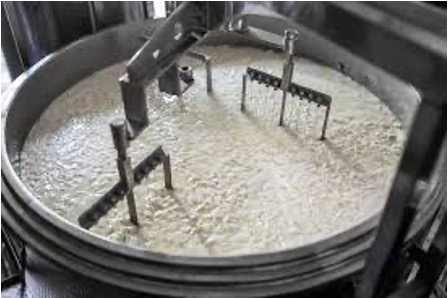
In a Load Controls trial on an ice cream mixer, operators had been stopping the process by ear, listening for the motor to slow, and batches were often over-processed. With a power sensor on the motor, power rose by 15% over the run while current rose by only 5%, making power about three times more sensitive. Power then dropped suddenly just before 40 minutes; stopping there gave a smooth product. The same end-point approach applies to doughs, creams, adhesives, slurries and granulation.
The Universal Power Cell has an adjustable full scale, so an oversized mixer motor can still be read with good resolution, and an adjustable response time that smooths out lumpy materials or slow agitators. Its 4–20 mA and 0–10 V outputs feed a PLC, chart recorder or panel meter. The sensor sits in the control cabinet, so there are no vessel penetrations and nothing exposed to washdown.
Further reading: Food processing, Pharmaceuticals, Chemical processing, Why measure power, not amps
Can motor power really tell me the viscosity?
It gives a reliable relative measure. For a given mixer, speed and fill level, power rises and falls with the viscosity of the mixture, which is why it can track a batch and detect its end point. It does not replace a laboratory viscometer for absolute values.
Does the sensor go into the tank?
No. It measures the motor supply in the control cabinet, so there are no vessel penetrations, nothing to clean and nothing in contact with the product.
How do I detect a broken agitator blade?
Set a low trip point below the normal running power. A broken or detached blade reduces the load on the motor, so power drops below that level and the control raises an alarm or stops the drive.
Does it work on mixers with variable speed drives?
Yes. The Universal Power Cell is installed on the drive output, where its Hall effect sensing measures true power despite the distorted waveform.
Tell us the application, motor size and drive type. We will recommend a model and send you a quotation. 12-month warranty and support from our team in France.
