

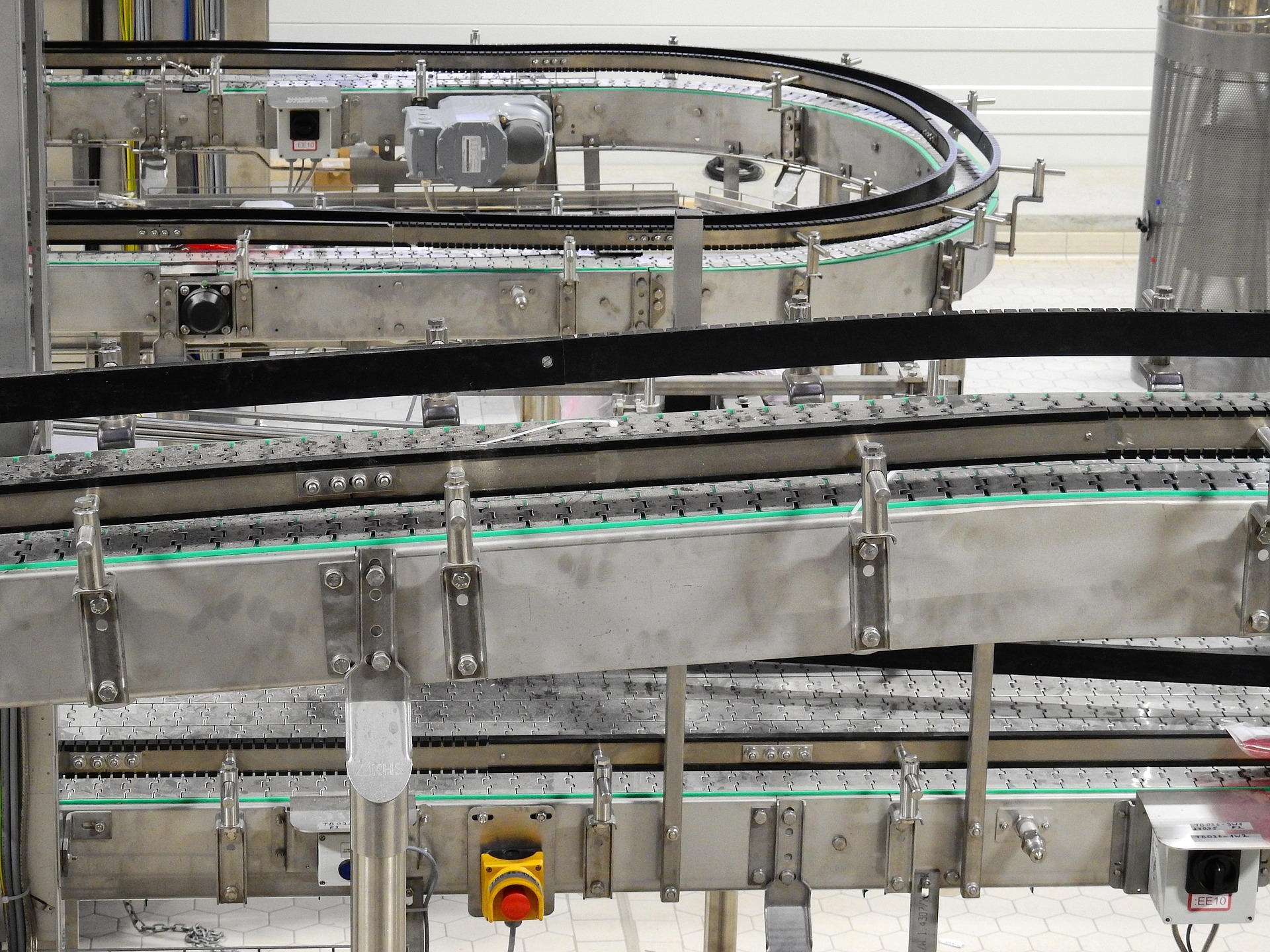
A conveyor jam turns motor torque into broken chains, torn belts and stripped gearboxes in a fraction of a second. Load Controls fast response controls watch the motor's true power and stop the drive within 25 milliseconds of a jam, acting as an electronic shear pin that never needs replacing.
Many conveyors and indexing machines run lightly loaded. When one jams, the load can jump sharply but still stay below a fixed high limit set for normal peak load. Load Controls adds a second test: how fast the load is changing. A sudden rise in power, measured as change in load over change in time, is the signature of a jam, so the control can trip on it even when the absolute load is still modest.
Power is also the right signal at light load. A motor's current hardly changes in the lower half of its range, so a current relay misses the faults that matter most on lightly loaded equipment. Power moves in proportion to the work being done. See why we measure power, not amps.
A mechanical shear pin protects a drive by breaking, which means downtime and a replacement every time. An electronic shear pin does the same job by cutting the motor supply, then resets locally, remotely or automatically once the jam is cleared. Adjustable start-up and trip delays of up to 90 seconds ignore motor inrush and normal load peaks. Read more in Electronic shear pins.
Further reading: Why fault detection speed matters, Electronic shear pins, Mining and quarrying, Why measure power, not amps
How fast do the controls stop a jammed conveyor?
The PFR-1550, PFR-1750 and ROC-50 respond in 25 milliseconds, around ten times faster than typical load controls, which is fast enough to stop the shock before it reaches chains, gearboxes and bearings.
What is rate-of-change sensing?
Instead of only comparing the load with a fixed limit, the ROC-50 watches how quickly the load rises. A jam produces a much steeper rise than normal loading, so it can be caught on lightly loaded machines where the absolute load barely moves.
Will it trip every time the conveyor starts?
No. A start-up timer ignores the motor inrush, and a trip delay ignores brief peaks that are part of normal operation.
Where is the sensor installed?
In the motor control cabinet, on the motor supply. Nothing is mounted on the conveyor, so it is protected from dust, washdown and vibration.
Tell us the application, motor size and drive type. We will recommend a model and send you a quotation. 12-month warranty and support from our team in France.
